South African Hunting Reimagined
7-Day Low-Fence Free-Range Karoo Hunt Camp$3,725 per hunterA realistic 7-day budget based on 3 hunters, including hunting days, arrival/departure logistics, and trophy fees for common springbuck, common blesbuck, common impala, and warthog.
7-Day Limpopo Bushveld Hunt Camp$4,225 per hunterA realistic 7-day budget based on 3 hunters, including hunting days, arrival/departure logistics, and trophy fees for common impala, warthog, blue wildebeest, zebra, and unlimited non-export baboons.
Karoo and Bushveld Daily Rate: $275 per hunter per full hunting day
Western Cape Daily Rate: $450 per hunter per full hunting day
Hunt Lengths: 7 or 10 full hunting days
Karoo and Bushveld Group Size: 3 to 4 hunters
Western Cape Group Size: 1 to 3 hunters
Trophy Fees: Listed clearly under each hunt camp
Animals: Charged only if taken or wounded
Looks too good to be true?There is no trick. It's a different model.We cut out the full lodge-service rhythm many hunters do not need and put the focus back on the hunt, the camp, the land, and the people around the fire.Groceries are bought by the group.
Meals are done together.
Hunters help around camp.You still get proper rooms, Professional Hunters, trackers, skinners, vehicles, trophy care, and real South African hunting infrastructure.This is not cheap Africa.This is South Africa, hunted differently.
A Hunt That Makes You BetterAfrica Hunt Camp is not only about hunting South Africa differently.It is also about becoming a better hunter.Many hunters in the United States and the rest of the world wait all year for one or two short opportunities. A tag. A weekend. A few days in the woods. Maybe one real chance at an animal.South Africa gives a hunter something different.More time in the field.
More animals to observe.
More stalks.
More wind calls.
More shot decisions.
More chances to learn what worked, what failed, and why.That experience matters.Whether you are glassing open Karoo country, reading tracks in the Limpopo bushveld, or living out of a spike camp in the Western Cape mountains, the goal is not only to take animals.The goal is to leave sharper than you arrived.Better at judging animals.
Better at reading country.
Better at understanding wind, movement, angles, distance, pressure, and patience.
Better prepared for the hunts you will do back home.This is still a hunt.But for the right hunter, it can also become one of the most useful hunting experiences he will ever have.
Why Africa Hunt Camp Exists:
Are you tired of the same old South African safari offering?The high trophy fees.The pay-by-the-inch costing.The put-and-take operations.Pricing that looks simple at first, but becomes harder to understand once the extras start adding up.The neat package that starts to feel more like an order form than a hunt.The pressure to complete that list.The Professional Hunter who slowly gets pushed into acting more like a salesman than a guide.We grew tired of that too.Africa Hunt Camp by Trophy Destinations was created for hunters who want South Africa to feel different again.For the blue-collar worker who saves for one good hunting trip.For the husband who is burned out and needs a proper getaway with good friends.For the family who wants to hunt together.For the group of buddies who want to relax and joke around a fire after a good day in the veld.For the hunter who cares more about the hunt, the land, the animals, and the people in camp than the performance of luxury around it.It was also built for hunters who still want to grow.Hunters who want more than a photo.Hunters who want more time behind glass, more stalks, more shot decisions, more animal encounters, and more honest conversations about why a hunt came together or why it fell apart.South Africa gives hunters something many places cannot: opportunity.Not guaranteed outcomes.Opportunity.Opportunity to hunt more, see more, learn more, fail more, adjust more, and become better because of it.This is not cheap Africa.
This is not a shortcut.
This is South Africa, hunted differently.The idea is simple.We keep what matters and cut out what many hunters do not need.You still get proper hunting areas and animals, licensed PHs, vehicles, trackers, skinners, field trophy preparation, and clear trophy fees.What changes is the rhythm.In our lodge-based hunt camps, we stop for groceries on arrival.The group buys what they actually want to eat and drink.Meals are done together.PHs eat with you.Hunters help around camp, clean up after themselves, and make their own beds.Laundry may happen from time to time, but this is not daily lodge service.In our backcountry camp, the experience goes even further. Tents, spike camp, simple food, mountain country, long glassing, physical effort, and a hunt shaped by what the land gives us.It is also where the learning side becomes even more important. Pack systems, camp rhythm, glassing, field shooting, shot discipline, wind, terrain, and decision-making all become part of the hunt itself.Each camp is different.The philosophy stays the same.No hidden costs.
No pay-by-the-inch.
No put-and-take.
No fake certainty.
No pressure to shoot the wrong animal just to finish a package.We have excellent animals.We have taken exceptional trophies.You will have opportunities.But if you are coming for a guaranteed size, or a guaranteed photo with every animal on a list, this probably is not your hunt.A real hunt still needs room for the animal to win.Africa Hunt Camp is for hunters who understand that.
Choose your camp
Rather have a Traditional Catered Safari?
Free-Range • Low-Fence • Big Sky Country
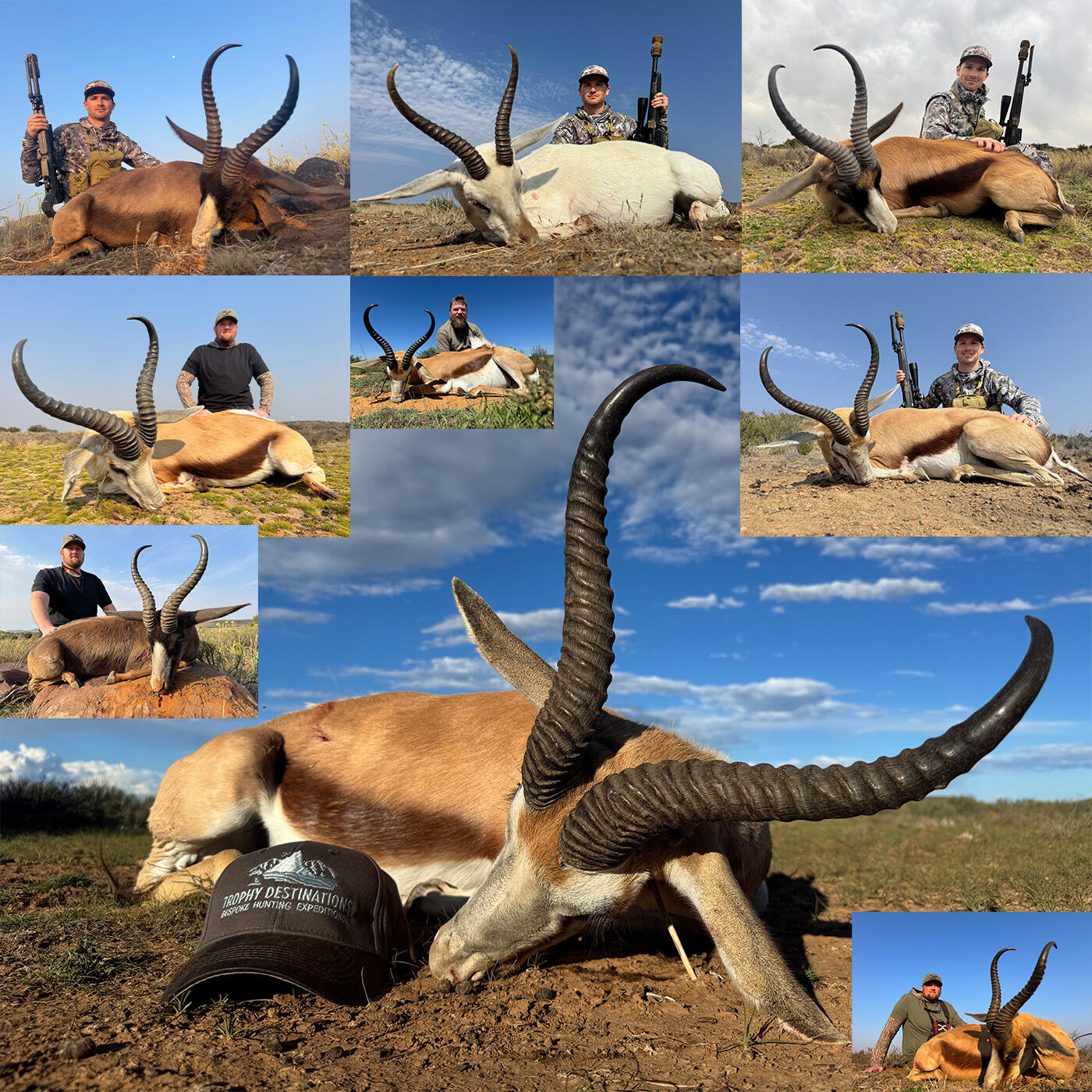
Open Karoo country. Big skies. Long glassing. Low fences. Animals that can move, disappear, and make us earn the opportunity.This is South Africa for hunters who still want the land to have a say.Daily Rate: $275 per hunter per full hunting day
Hunt Length: 7 or 10 full hunting days
Group Size: 3 to 4 hunters
Sample 7-Day Budget: $3,725 per hunter
Sample 10-Day Budget: $5,300 per hunter
Trophy Fees: See full price breakdown below.
The Northern Cape does not feel like the South Africa most hunters expect.There are no high fences holding the hunt together.
No animals waiting behind a curtain.
No neat little block where every opportunity can be manufactured.This is wide open Karoo country, with big skies, sheep fences, windmills, mountains, long glassing, and animals that can move farther in a day than most hunters expect.That is why the words matter here.Free-range. Low-fence.Not free-range as a marketing phrase.
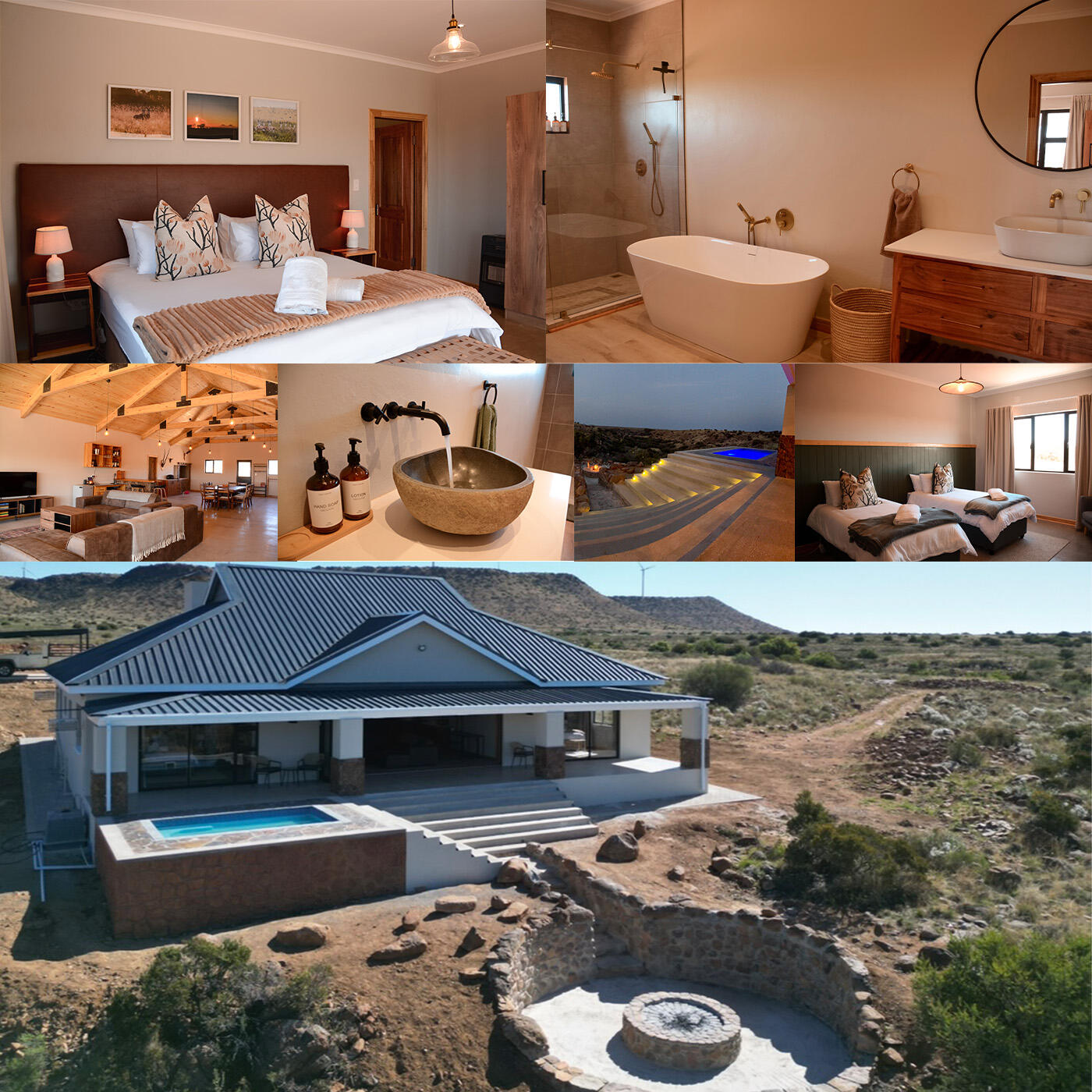
Not high-fence hunting dressed up with softer language.This is low-fence Karoo hunting where animals can move, disappear, cross boundaries, use distance as their defence, and simply not be where we hoped they would be.That uncertainty is not a flaw.It is the point.Karoo Hunt Camp was built for hunters who want South Africa to feel more like deer camp than a traditional catered safari.You still sleep in proper lodge rooms.
You still have clean beds, power, hot showers, safe accommodation, licensed PHs, hunting vehicles, trackers, skinners, and proper trophy care.But the rhythm is different.This is not a hotel-style safari where everything happens around lodge service.This is a hunting camp with proper rooms, built around the hunt itself.On arrival, we stop for groceries. The group buys what they actually want to eat and drink. Meals are done together. The PHs eat with you. Everyone helps where needed. The fire becomes part of the evening, and the stories start where the day left off.You help cook.
You clean up after yourself.
You make your own bed.
You may wear the same hunting pants more than once.
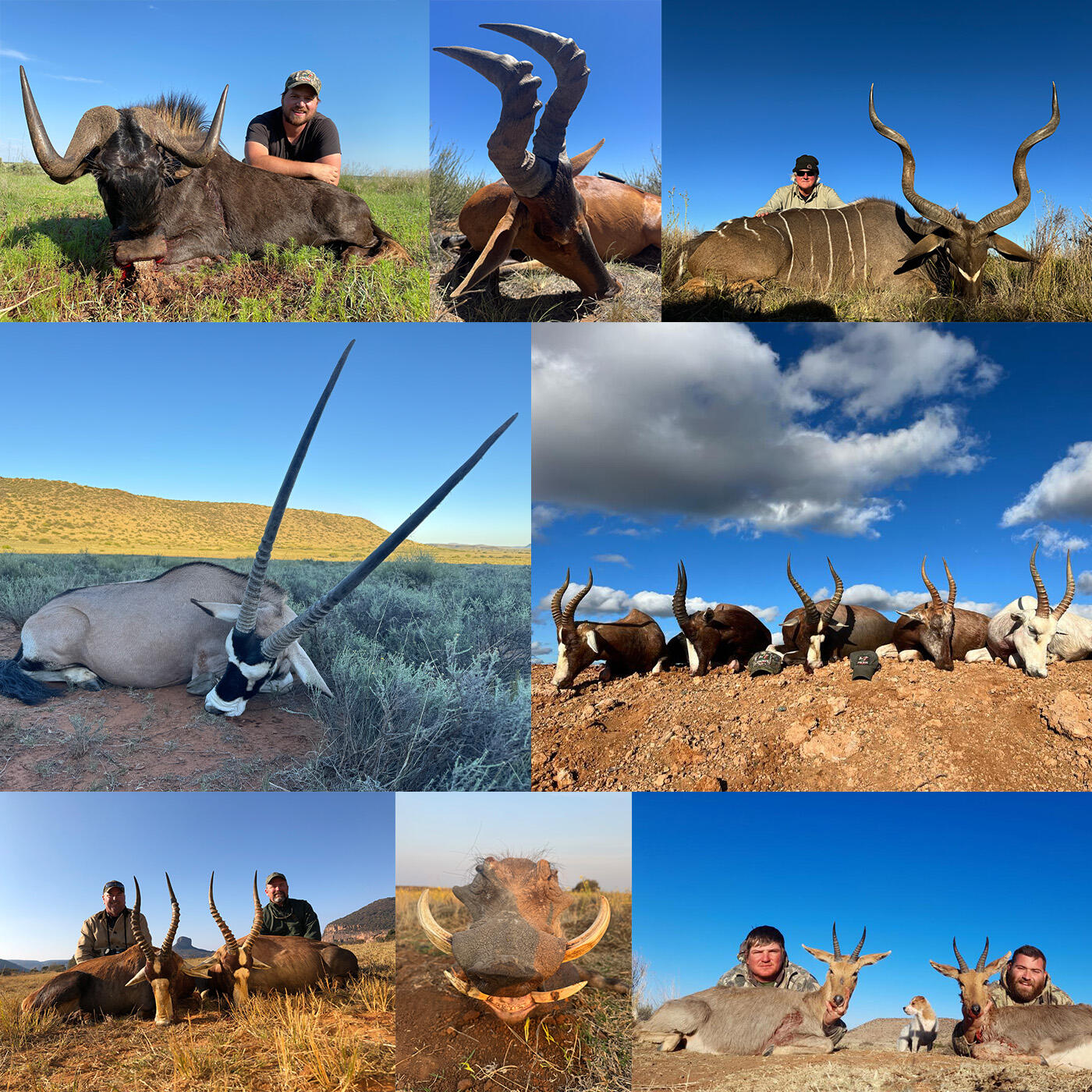
Laundry can happen from time to time, but this is not daily lodge service.If that sounds like a downgrade, this probably is not your hunt.If it sounds like deer camp in South Africa, then you already understand what we are trying to build.Honest Opportunity.The Northern Cape can produce excellent animals. Springbuck, blesbuck, mountain reedbuck, warthog, wildebeest, gemsbuck, red hartebeest, steenbuck, duiker, Cape kudu, and more can all form part of the experience.But we will not sell you fake certainty.Cape kudu, nyala, gemsbuck, wildebeest, and other animals can be discussed before the hunt, but they are not promises.In free-range low-fence country, a mature animal worth hunting still has to be found.He may be there.
He may have moved.
We may see him.
We may not.If an animal is important to you, we will plan around it honestly and hunt for it hard. But we will not guarantee a mature animal simply because it appears on a wish list.A real hunt has to leave room for the animal to win.What the Karoo TeachesThe Karoo is an excellent place to sharpen a hunter.Open country exposes mistakes quickly.Bad movement gets seen.
Poor wind decisions cost stalks.
Distance has to be judged properly.
Animals must be watched, compared, and understood before the right decision is made.This is valuable country for hunters who want more real field experience.You may spend time behind glass, pick apart open hillsides, plan stalks around wind and terrain, and learn how quickly a seemingly simple hunt can become difficult when the animal has space, eyes, and distance on its side.For hunters used to short seasons and limited opportunities, this kind of country gives something important:Repetition.
More animals to observe.
More stalks to attempt.
More decisions to make.
More lessons to take home.That is part of what makes the Karoo Hunt Camp valuable. It is not only a lower-cost way to hunt South Africa. It is a chance to become sharper in open country.How It WorksDaily Rate:
$275 per hunter per full hunting dayHunt Length:
Minimum 7 full hunting days
10 full hunting days available for groups wanting more time and more opportunityGroup Size:
Minimum 3 hunters
Maximum 4 huntersArrival and Departure Logistics:
$450 per vehicle used, per arrival or departure day
Maximum 3 hunters per vehicle.
A group of 3 usually requires one vehicle.
A group of 4 requires two vehicles.Food and Drinks:
Groceries are bought on arrival and paid at cost by the group.Trophy Fees:
Charged only for animals taken or wounded.Field Learning Focus:Depending on the group and the hunt, we will naturally work on the skills that matter in open country:Glassing and spotting animals
Reading wind and terrain
Planning stalks
Judging animals before the shot
Building stable field shooting positions
Understanding distance and angles
Knowing when to shoot and when to waitThis is not a formal classroom course. It is practical learning through real hunting.What Is Included:
Proper lodge accommodation
Power
Hot showers
Clean beds
Safe lodging
Licensed Professional Hunter
Hunting vehicle
Trackers and skinners
Field preparation of trophies
Access to the hunting area
Clear trophy fees
No trophy-size upcharges
No pressure salesWhat Is Not Included:
Groceries and personal drinks/alcohol
Full-time chef
Housekeeper or daily lodge service
Daily laundry service
Taxidermy and shipping
Dip and pack
Flights
Firearm permits
Firearm rental
Personal expenses
Accommodation before or after the huntExample Hunt Budgets:
These are realistic hunt budgets, not guaranteed kill lists.They include hunting days, arrival and departure logistics, and trophy fees for the animals listed.They exclude groceries, alcohol, taxidermy, shipping, tips, flights, firearm permits, and personal expenses.7-Day Northern Cape Hunt Camp
3 hunters / 7 hunting days
$3,725 per hunter
Example budgets includes trophy fees for: 1 common springbuck, 1 common blesbuck, 1 common impala, 1 warthog per hunter.10-Day Northern Cape Hunt Camp
3 hunters / 10 hunting days
$5,300 per hunter
Example budgets includes trophy fees for: 1 common springbuck, 1 common blesbuck, 1 common impala, 1 warthog, 1 black wildebeest per hunter.7-Day Northern Cape Hunt Camp
4 hunters / 7 hunting days
$3,875 per hunter
Example budgets includes trophy fees for: 1 Common springbuck, 1 common blesbuck, 1 common impala, 1 warthog per hunter.10-Day Northern Cape Hunt Camp
4 hunters / 10 hunting days
$5,450 per hunter
Example budgets includes trophy fees for: 1 Common springbuck, 1 common blesbuck, 1 common impala, 1 warthog, 1 black wildebeest per hunter.Northern Cape Trophy Fees
Common Springbuck: $450
Copper Springbuck: $750
Black Springbuck: $650
White Springbuck: $850
Common Blesbuck: $450
White Blesbuck: $600
Yellow Blesbuck: $800
Copper Blesbuck: $800
Saddle Blesbuck: $1,600
Red Hartebeest: $800
Common Impala: $350
Mountain Reedbuck: $650
Cape Kudu: $1,500
Steenbuck: $250
Common Duiker: $300
Warthog: $250
Blue Wildebeest: $750
Black Wildebeest: $750
Golden Wildebeest: $1,500
Gemsbuck: $950
Golden Gemsbuck: $1,500
Nyala: $1,500Special species, animals requiring permits, or third-party animals quoted separately.Substitutions
Planned animals may be substituted for same-value alternatives where available, or upgraded to a higher-value species by paying the difference in trophy fee.All substitutions remain subject to availability, maturity, and whether a suitable animal is found during the hunt.No animal will be forced simply to complete a list.
Mountains • Riverine Cover • Buffalo Country
Limpopo does not give itself away all at once.A track in the sand. A shape in the grey bush. A kudu bull in a gap for two seconds before he becomes a memory. A bushbuck on the edge of shadow.This is mountain bushveld hunting where the cover still matters, the wind still matters, and the animal still has to make a mistake.Daily Rate: $275 per hunter per full hunting day
Hunt Length: 7 or 10 full hunting days
Group Size: 3 to 4 hunters
Sample 7-Day Budget: $4,225 per hunter
Sample 10-Day Budget: $5,050 per hunter
Trophy Fees: See full price breakdown below.
A warthog slipping into cover.
A klipspringer watching from the rocks long before you ever find him in your glass.This is a different kind of South African hunt camp.And we want to be honest about what it is.Bushveld Hunt Camp is a high-fence Limpopo hunting experience.We do not hide that, and we do not dress it up as something else.But high-fence does not mean fake.The animals here live wild in established, self-sustaining herds.This is not put-and-take.
This is not a small camp where animals are simply waiting to be collected.The terrain still matters.
The wind still matters.
The cover still matters.
The animal still has to make a mistake.
And you still have to be ready when it does.The country is mountainous, broken, and covered in thick bush and riverine cover.Animals disappear quickly here.A kudu can step into the shade and vanish.
A bushbuck can be there one second and gone the next.
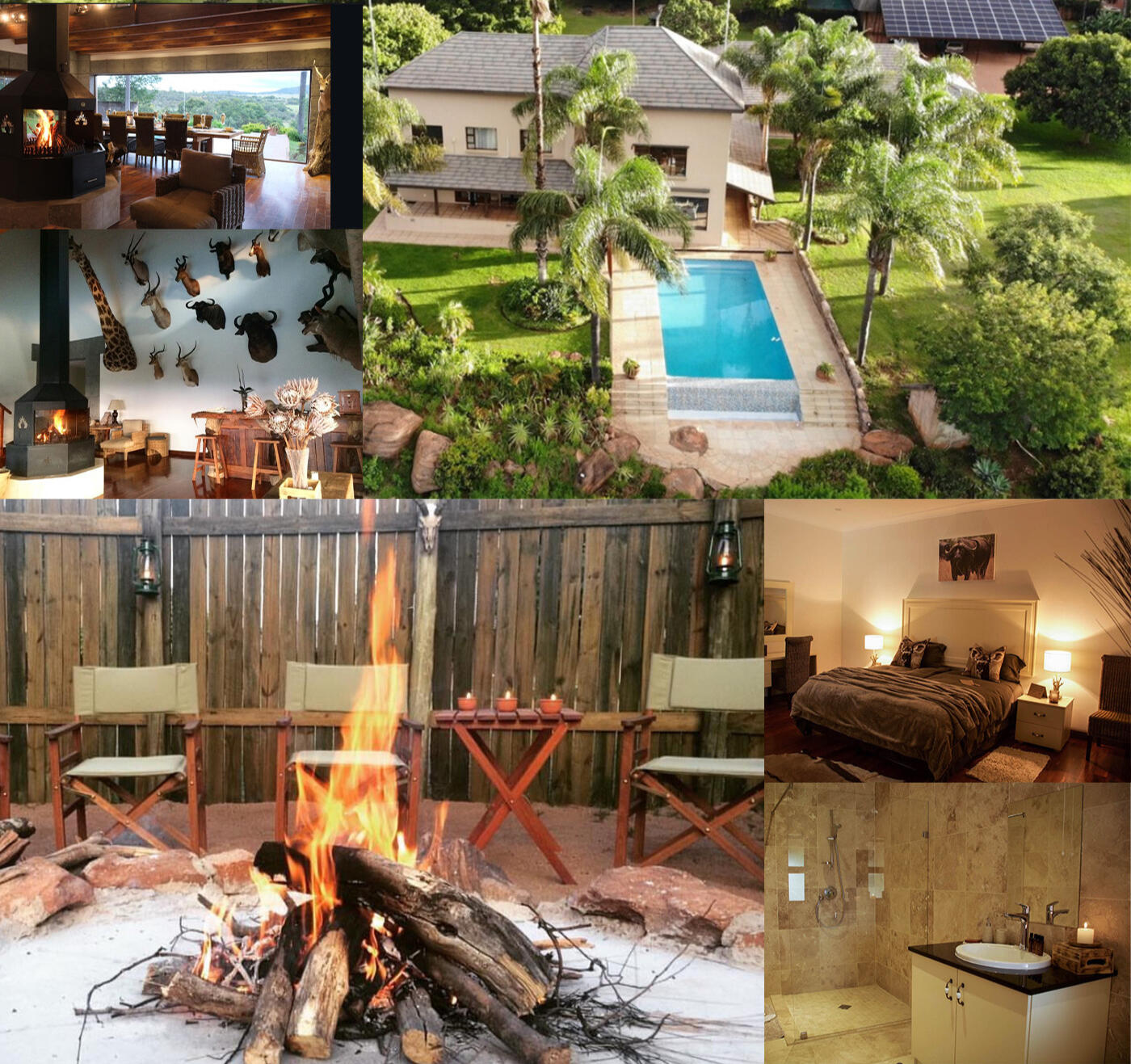
Buffalo country has a way of making people pay attention.This hunt is built for hunters who want the hunt to remain the centre of the trip.You still sleep in proper lodge rooms. You still have clean beds, hot showers, power, safe accommodation, licensed Professional Hunters, hunting vehicles, trackers, skinners, and proper field preparation of trophies.But the rhythm is different.This is not full lodge hospitality.It is not full DIY either.It sits somewhere more honest for the right hunter.Comfortable enough where it matters.
Practical enough to keep the focus where it belongs.On arrival, we stop for groceries. The group buys what they actually want to eat and drink. Meals are done together. The PHs eat with you. Everyone helps where needed. The fire becomes the place where the day gets sorted out.The good stalks.
The blown chances.
The animals seen.
The animals missed.
The plans for tomorrow.That is where the hunt starts becoming more than a price list.You help cook.
You help clean.
You make your own bed.
Laundry can be done from time to time, but this is not daily lodge service.If you can handle deer camp, you can handle this.This is not cheap Africa.
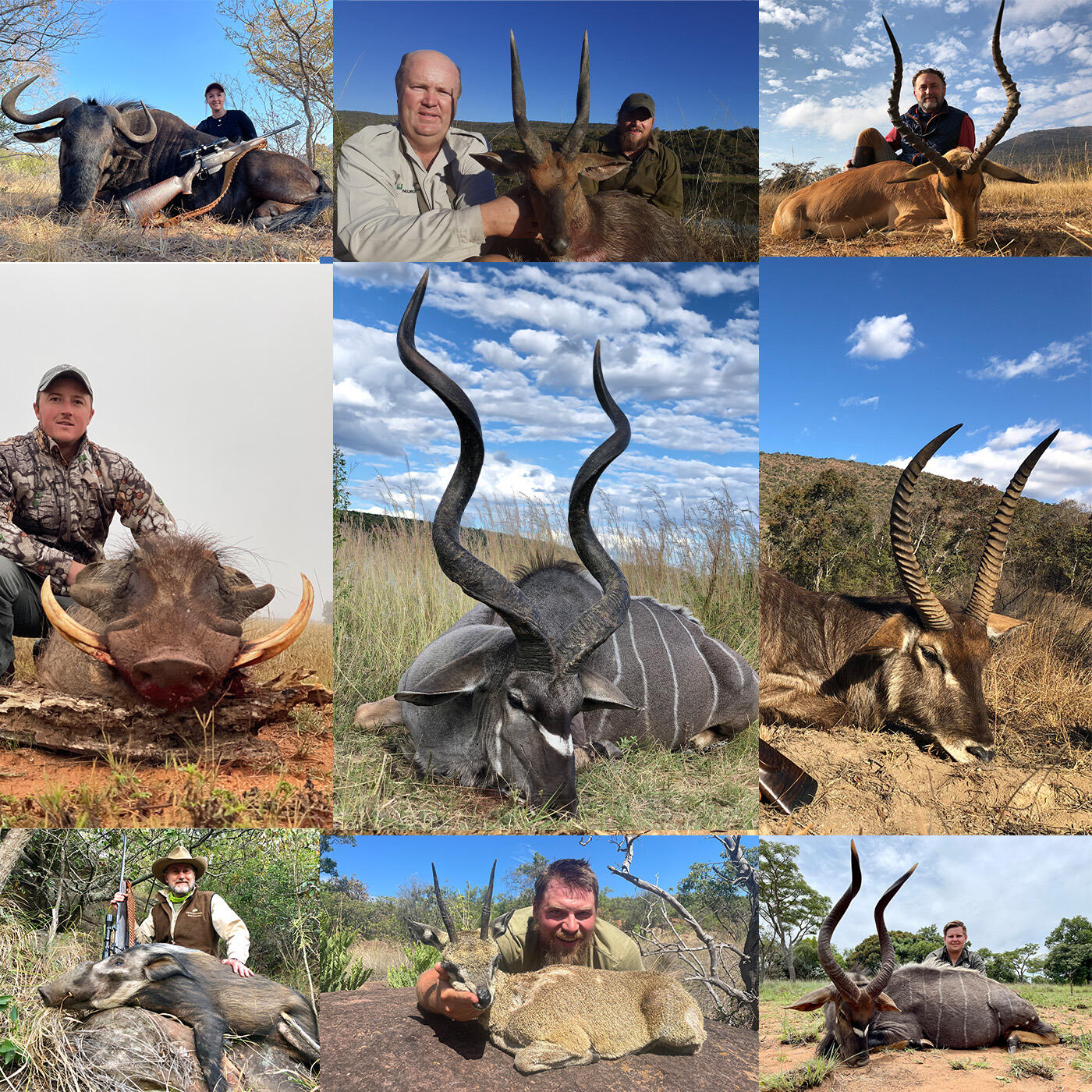
This is not a shortcut.This is a South African bushveld hunt camp for hunters who care more about hunting than being waited on.Honest Opportunity.Limpopo has very good animals, but we will not turn them into promises.Southern greater kudu, Limpopo bushbuck, klipspringer, nyala, waterbuck, bushpig, golden wildebeest, and Cape buffalo can all be found. But they are not automatic outcomes.The animal must be there.
The animal must be mature.
The animal must be right.Some days Limpopo feels generous.
Some days the bush closes around everything and makes you work for a glimpse.That is part of the appeal.We will guide the hunt properly, but we will not turn elusive animals into guarantees just because they appear on a price list.A real hunt still needs room for the animal to win.What the Bushveld TeachesLimpopo teaches different lessons.The bushveld is close, broken, and unforgiving. Animals appear and vanish quickly. Tracks matter. Wind matters. Patience matters.A hunter learns to slow down here.
You learn to read cover.
You learn to look through the bush, not just at it.
You learn how quickly an animal can disappear in a few steps.
You learn that a small gap may be the only opportunity you get.
You learn that rushing the moment usually costs you.This is valuable hunting for anyone who wants to become better in close cover.The lessons are different from the Karoo or the Western Cape mountains, but they are just as useful. Tracking, patience, shot windows, animal behaviour, and reading sign all become part of the experience.For many hunters, Limpopo may be the place where they learn to stop forcing the hunt and start letting the bush reveal itself.How It WorksDaily Rate:
$275 per hunter per full hunting dayHunt Length:
Minimum 7 full hunting days
10 full hunting days available for groups wanting more time and more opportunityGroup Size:
Minimum 3 hunters
Maximum 4 huntersArrival and Departure Logistics:
$450 per vehicle used, per arrival or departure day
Maximum 3 hunters per vehicle.
A group of 3 usually requires one vehicle.
A group of 4 requires two vehicles.Food and Drinks:
Groceries are bought on arrival and paid at cost by the group.Trophy Fees:
Charged only for animals taken or wounded.Field Learning Focus:Depending on the group and the hunt, we will naturally work on the skills that matter in bushveld country:Reading tracks and fresh sign
Moving quietly through cover
Understanding wind in broken terrain
Judging animals through small windows
Preparing for quick shot opportunities
Knowing when not to rush
Following up properly
Understanding animal behaviour in thick bushThis is not a staged training course. It is practical learning through real hunting situations.What Is Included:
Proper lodge accommodation
Power
Hot showers
Clean beds
Safe lodging
Licensed Professional Hunter
Hunting vehicle
Trackers and skinners
Field preparation of trophies
Access to the hunting area
Clear trophy fees
No trophy-size upcharges
No pressure salesWhat Is Not Included:
Groceries and personal drinks/alcohol
Full-time chef
Housekeeper or daily lodge service
Daily laundry service
Taxidermy and shipping
Dip and pack
Flights
Firearm permits
Firearm rental
Personal expenses
Accommodation before or after the huntExample Hunt Budgets:
These are realistic hunt budgets, not guaranteed kill lists.They include hunting days, arrival and departure logistics, the listed animals.They exclude groceries, alcohol, taxidermy, shipping, tips, flights, firearm permits, and personal expenses.7-Day Limpopo Hunt Camp
3 hunters / 7 hunting days
$4,225 per hunter
Example budgets includes trophy fees for: 1 Common impala, 1 warthog, 1 blue wildebeest, 1 zebra, unlimited baboons (non-export only) per hunter.10-Day Limpopo Hunt Camp
3 hunters / 10 hunting days
$5,050 per hunter
Example budgets includes trophy fees for: 1 Common impala, 1 warthog, 1 blue wildebeest, 1 zebra, unlimited baboons (non-export only) per hunter.7-Day Limpopo Hunt Camp
4 hunters / 7 hunting days
$4,375 per hunter
Example budgets includes trophy fees for: 1 Common impala, 1 warthog, 1 blue wildebeest, 1 zebra, unlimited baboons (non-export only) per hunter.10-Day Limpopo Hunt Camp
4 hunters / 10 hunting days
$5,200 per hunter
Example budgets includes trophy fees for: 1 Common impala, 1 warthog, 1 blue wildebeest, 1 zebra, unlimited baboons (non-export only) per hunter.Limpopo Trophy Fees
Southern Greater Kudu: $1,600
Common Impala: $350
Warthog: $250
Blue Wildebeest: $650
Golden Wildebeest: $1,500
Limpopo Bushbuck: $750
Klipspringer: $750
Nyala: $1,500
Waterbuck: $1,500
Zebra: $750
Bushpig, chance encounter: $450
Bushpig, baited: $650
Baboon (non-export): FREE
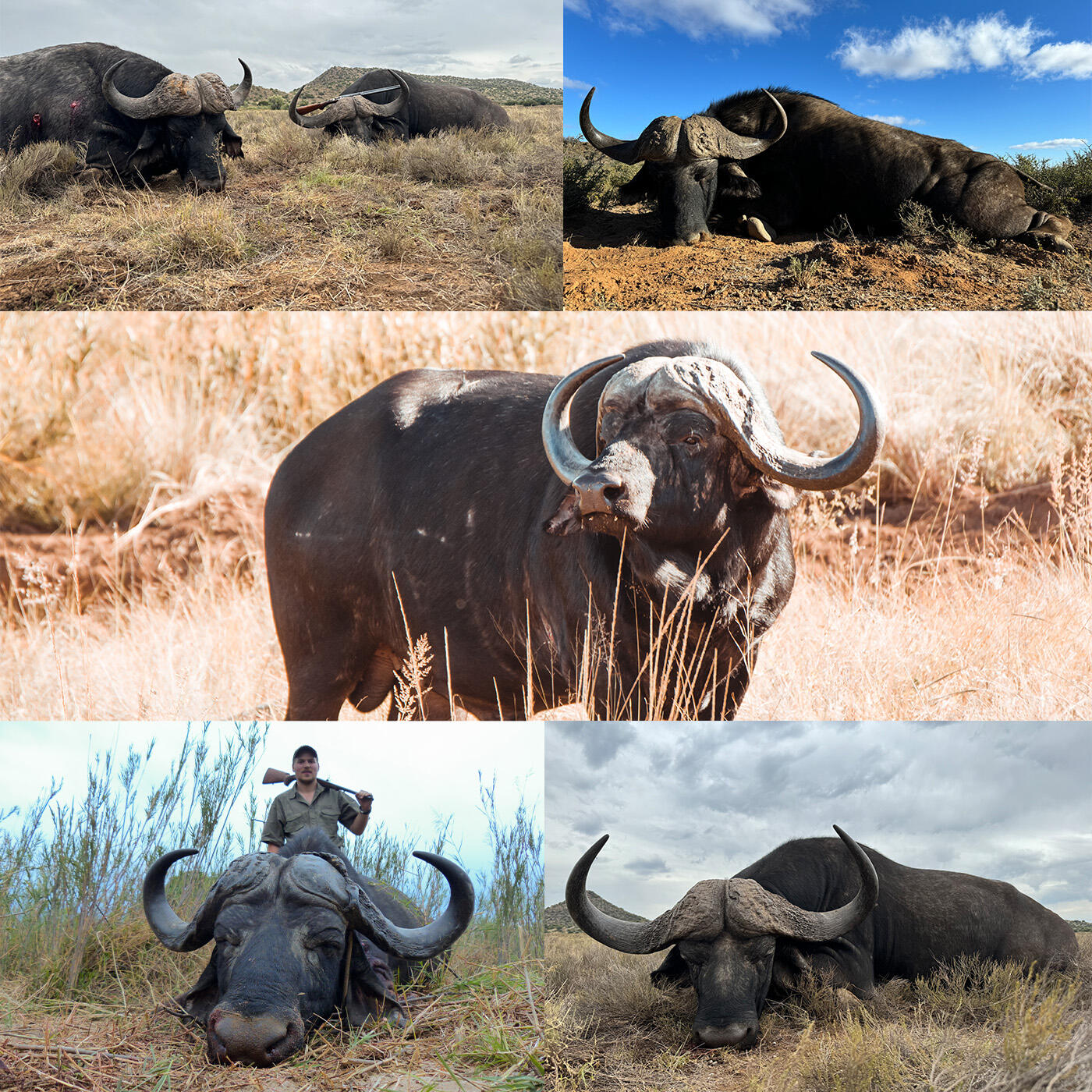
Cape Buffalo: $8,000Special species, animals requiring permits, or species hunted on third-party properties may be quoted separately before the hunt.A Note on Buffalo
Cape buffalo are not treated like just another animal on a list.
They require the right hunter, the right rifle, the right mindset, and the right respect. We do not sell cheap buffalo hunts, and we do not treat dangerous game as a casual add-on.The price is fair, but the experience should never feel cheap.Substitutions
Planned animals may be substituted for same-value alternatives where available, or upgraded to a higher-value species by paying the difference in trophy fee.All substitutions remain subject to availability, maturity, and whether a suitable animal is found during the hunt.No animal will be forced simply to complete a list.
Spike Camp • Mountain Country • Earned Opportunity
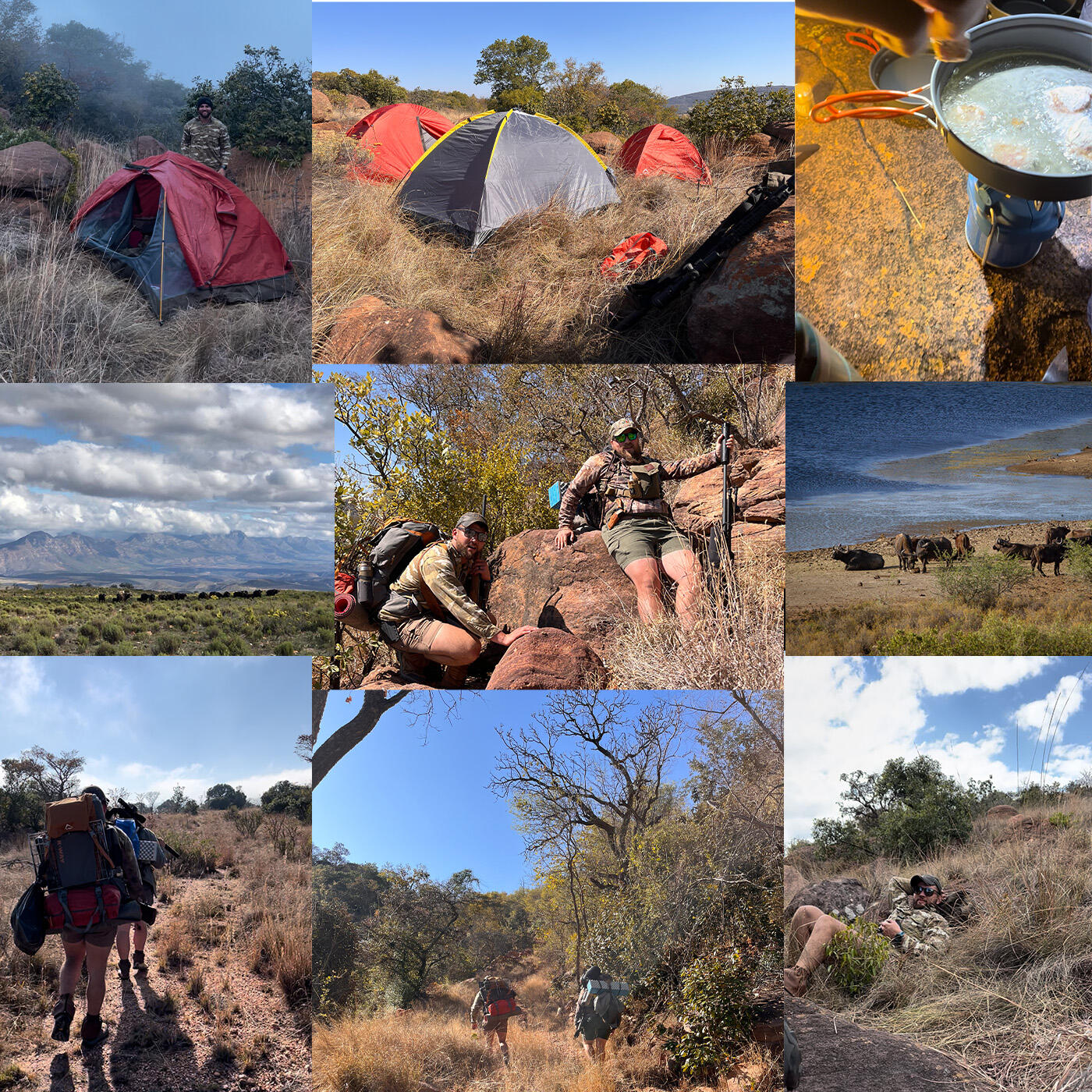
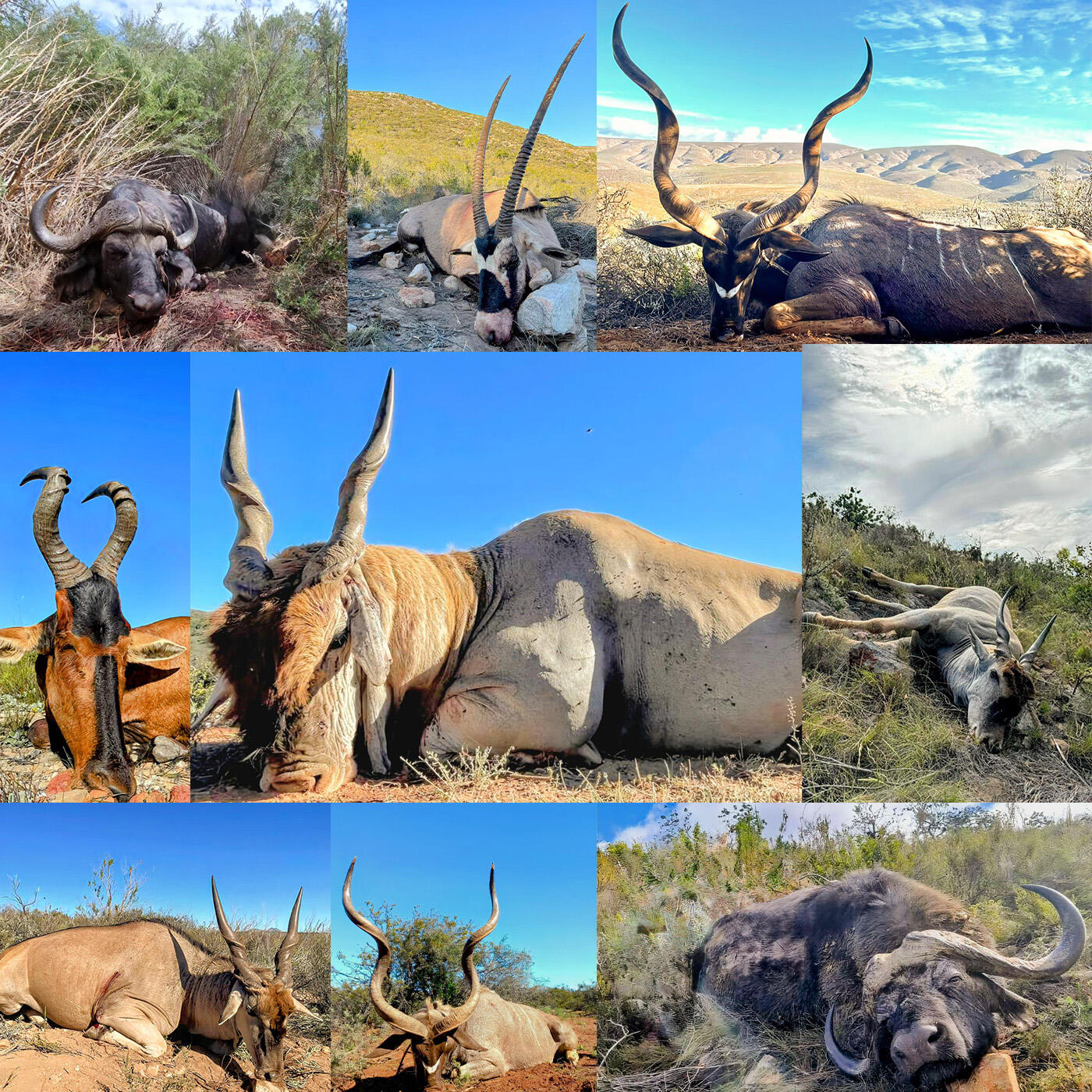
This is the more adventurous side of Africa Hunt Camp.A Western Cape spike-camp hunt built for one to three hunters who want South Africa to feel closer to elk camp than a traditional safari.This is not a lodge safari with a tent added for marketing.This is a hunt where the camp, the country, the glassing, the walking, the gear, the food, the weather, the physical effort, and the lessons learned along the way all become part of the experience.Backcountry Hunt Camp is being developed in partnership with Rewilding Africa on a unique Western Cape property of roughly 20,000 acres, close enough to combine with a visit to the Garden Route.This is a high-fence experience.We say that openly.But 20,000 acres of mountain country, broken valleys, thick cover and hidden corners is not a small camp where every outcome can be controlled.The animal still has to be found.The wind still matters.The terrain still matters.The hunter still has to earn the opportunity.The Bigger IdeaBackcountry Hunt Camp is not only about hunting South Africa differently.It is also about giving serious hunters more time in real hunting situations.Many hunters in the United States and elsewhere wait all year for one or two short windows. A tag. A weekend. A few days in the woods. Maybe one real opportunity at an animal.South Africa gives a hunter something different.More time in the field.More animals to observe.More stalks.More glassing.More wind calls.More shot decisions.More chances to learn what worked, what failed, and why.That experience matters.We do not want to compete with your hunting season.We want to extend it.Our prime hunting season falls during a time when many hunters back home have very little open. That creates an opportunity to come to South Africa, hunt hard, gain real field experience, and take those lessons back to your elk, mule deer, whitetail, bear, or mountain hunts.This is still a hunt.But for the right hunter, it can also become one of the most useful hunting experiences he will ever have.Built to Make You BetterBackcountry Hunt Camp is being built as a practical field-learning experience for serious hunters.Not a classroom.A real hunt.The kind of hunt where every day gives you something to take home.How to glass country properly.How to pick apart mountain shadows.How to move without wasting energy.How to manage a pack.How to build a simple camp system.How to eat, sleep, and hunt efficiently away from the lodge.How to judge animals from distance.How to build a stable field position.How to make ethical decisions when the shot is longer, the wind matters, and the animal may not give you much time.There may be opportunities for longer-range shooting, but this is not about turning hunting into target practice.It is about learning when a shot is right, when it is not, and how to become calm and capable enough to know the difference.The Camp RhythmThe plan is simple.First and last night in the lodge.The rest of the hunt lived closer to the land.Spike camp.Tents.Lightweight field meals.Big country.Long glassing.Walking.Climbing.Cold mornings.Hard-earned opportunity.Some routes may take us past old rock shelters containing ancient San rock art. Depending on the weather and hunt plan, we may spend a night near one of these shelters as part of the journey through the property.This is not only about what we might hunt.It is about where the hunt takes us.This Is Not a Trophy-List SafariYou may arrive with animals in mind.That is normal.We will plan around them honestly.But the land, weather, movement and opportunity will decide what we actually pursue.Some days may be spent glassing open country for Vaal rhebuck, eland, kudu or wildebeest.Other days may lead us into rougher mountain country, riverbeds, old tracks or hidden corners where the hunt becomes less about comfort and more about discovery.There are good animals here.Exceptional animals may be possible.You will have opportunities.But we will not sell guaranteed size or fake certainty.The animal still has to be found.The animal still has to be right.And the hunt still needs room to become its own story.Backcountry Hunt Camp PricingDaily Rate$450 per hunter per full hunting dayGroup SizeMinimum 1 hunterMaximum 3 huntersMinimum Hunt Length7 full hunting daysExtended Hunt10 full hunting daysA 10-day hunt may include a planned lodge night in the middle of the hunt, giving the group an opportunity to reset, reorganise equipment and prepare for the next section of the property.Arrival and Departure Days$200 per hunter per arrival or departure day7-Day Base Hunt Cost$3,550 per hunter before trophy fees and personal expenses10-Day Base Hunt Cost$4,900 per hunter before trophy fees and personal expensesBackcountry meals, drinking water, core camp equipment and field hydration support are included.Trophy FeesCharged only for animals taken or wounded.Why the Daily Rate Is HigherBackcountry Hunt Camp is not a cheaper safari because we sleep in tents.It is a more logistically involved hunt.The daily rate carries the experience.The planning.The guiding.The limited group size.The movement of camp.The field logistics.The equipment.The route planning.The water, nutrition and food-weight planning.The recovery planning.And the responsibility of making a remote-style hunt work properly.Lodge-based hunts are easier to service.The rooms stay in one place.The kitchen stays in one place.The vehicles, equipment and support systems remain close.A spike-camp hunt asks more from the hunters, but it also asks more from the people running it.That is why the daily rate is higher.Not because there is more luxury.Because there is more involved.Core Backcountry GearWe provide the core spike-camp equipment required to make the hunt work properly.This includes:Quality lightweight tentsSleeping bags suited to the seasonSleeping padsCamp stoves and cookwareWater storage and treatment equipmentBasic field-kitchen equipmentCamp lightingEmergency and first-aid equipmentDry storage and shared camp equipmentLightweight backcountry mealsCoffee and teaElectrolytes and basic field hydration supportExperienced backcountry hunters are welcome to bring their own trusted tents, sleeping systems or cooking equipment after discussing it with us.We do not want someone’s experience ruined by a poor tent, an unsuitable sleeping bag, equipment that was never designed for this country, or food that adds unnecessary weight without providing the energy the hunt demands.A properly fitted backcountry pack remains the hunter’s responsibility.Packs are personal.Fit matters.The pack needs to carry properly when the days become long and the country becomes steep.The goal is not discomfort for its own sake.The goal is a real backcountry-style hunting experience, done properly.Water in the BackcountryDrinking water is provided as part of the hunt.But water is heavy.Depending on the route, weather, camp location and availability of reliable water sources, hunters may be required to carry part of the group’s water supply in their own packs.We will plan water requirements before each move.No hunter will be asked to carry an unreasonable load, but everyone entering spike camp must understand that personal water and part of the shared camp supply may need to be carried through the mountains.This is part of backcountry hunting.Every item has weight.Every litre matters.And everyone carries a fair share of what keeps the camp moving.A Partnered Third-Party PropertyBackcountry Hunt Camp is different from our Karoo and Bushveld camps.This is a third-party property operated in partnership with Rewilding Africa.We do not own the land, and we do not control the underlying landowner trophy fees.We have to pay the landowner’s price on every animal taken or wounded.We will not hide that.Our published trophy fees are built around the landowner’s price, the applicable VAT, and a limited operating margin for the administration, responsibility, risk, and work involved in offering these animals to international hunters.Because this is a third-party property, that margin may vary slightly between species.Some animals are simple to price.Others carry more uncertainty, more demand, more limited availability, more landowner conditions, or more responsibility from our side.We will not use third-party ownership as an excuse to double animal prices or hide excessive profit inside trophy fees.The daily rate pays for the hunt, the guiding, the equipment, the planning, and the experience.The trophy fee pays the landowner and leaves a limited margin for the responsibility attached to offering the animal.The animal is still the animal.It should not suddenly become worth twice as much simply because an international hunter is standing behind the rifle.Backcountry Trophy FeesCommon Springbuck: $350
Common Impala: $400
Common Blesbuck: $400
Fallow Deer: $550
Bushpig, chance encounter: $100
Blue Wildebeest: $750
Black Wildebeest: $750
Red Hartebeest: $750
Burchell’s Zebra: $750
Gemsbuck / Oryx: $950
Klipspringer: $550
Vaal rhebuck: $900
Nyala: $1,800
Cape Eland Bull: $2,900
Baboon, non-export only: FREEWaterbuck, giraffe and other special-request species are quoted separately where available.Special and Management OpportunitiesKudu, Cape buffalo, sable and selected management animals may be available by prior arrangement.Because this is a third-party property, some of these animals are subject to landowner categories, management decisions and variable pricing.We generally avoid pay-by-the-inch pricing, but where the landowner uses a size-based or category-based structure, we will explain it fully before the hunt.Availability, the likely price range and the maximum agreed trophy fee will be confirmed in writing before any of these animals are pursued.There will be no surprise upgrades after the shot.What Is IncludedFirst night in the lodge
Last night in the lodge
One planned mid-hunt lodge night on a 10-day hunt where required
Meals throughout the hunt
Lightweight backcountry meals during spike-camp sections
Coffee and tea
Drinking water
Electrolytes and basic field hydration support
Core spike-camp equipment
Licensed Professional Hunter
Hunting vehicle and field transport where the terrain allows
Trackers and skinners
Field preparation of trophies
Access to the hunting property
Route and camp planning
Water, nutrition and field-logistics planning
Clear trophy fees
No hidden trophy-size upcharges beyond the disclosed landowner categories
No pressure sales
Practical field learning through real hunting situationsWhat Is Not IncludedAlcohol, soft drinks and specialty beverages
Flights
Airport transfers outside the agreed arrival and departure arrangements
Taxidermy
Dip and pack
Shipping
Firearm permits
Firearm rental and ammunition
Personal clothing and footwear
Personal backcountry pack
Travel and medical insurance
Accommodation before or after the hunt
Special permits where required
Personal snacks or specialist dietary products requested by the hunter
Personal expenses
Alcohol may be enjoyed during lodge nights where available, but it will not normally be carried into spike camp.Food and Camp LifeBackcountry Hunt Camp food is provided as part of the hunt.This is not the grocery-based system used in our lodge Hunt Camps.When every kilogram has to be carried through mountain country, food becomes part of the planning.Meals need to be lightweight.Compact.Quick to prepare.High enough in protein and carbohydrates to replace the energy used during long days on foot.The menu may include dehydrated or lightweight field meals, oats, biltong or jerky, nuts, energy bars, trail food, coffee, tea and electrolyte support.This is not a catered lodge menu moved into a tent.It is food chosen to help hunters keep moving.Coffee before daylight.Something compact carried for lunch.A warm meal when camp is reached.Enough energy for the next climb.We will discuss allergies and important dietary requirements before the hunt, but the backcountry menu will remain practical rather than luxurious.Hunters may bring a small amount of their own preferred trail snacks or specialist products, provided they understand that they will carry the additional weight themselves.Alcohol, cases of soft drinks and other unnecessary weight will not normally be carried into spike camp.Serious backcountry hunters already understand why.Every item in the pack needs to justify its place.The PHs eat the same food as the hunters.Everyone helps.Everyone carries part of what makes camp work.That shared rhythm is part of the experience.Field Learning FocusDepending on the group, the weather, the route and the hunt itself, we will naturally work on the skills that matter in mountain country:Glassing and spotting animalsReading terrainUnderstanding wind in broken countryPlanning stalksManaging pack weightMoving efficiently in steep countryBuilding stable field shooting positionsJudging animals from distanceMaking better shot decisionsUnderstanding when to wait and when to moveLearning how a simple camp system worksThis is not a staged training course.It is practical learning through real hunting situations.The goal is not to make the hunt feel artificial.The goal is to make the hunter leave sharper than he arrived.Honest OpportunityThis is not a trophy-list safari.You may arrive with animals in mind.That is normal.We will plan around them honestly.But the land, weather, movement and opportunity will decide what we actually pursue.Some days may be spent glassing open country for Vaal rhebuck, eland, kudu or wildebeest.Other days may lead us into rougher mountain country, riverbeds, old tracks or hidden corners where the hunt becomes less about comfort and more about discovery.There are good animals here.Exceptional animals may be possible.You will have opportunities.But we will not sell guaranteed size or fake certainty.The animal still has to be found.The animal still has to be right.And the hunt still needs room to become its own story.Important Pricing NotesAll trophy fees are shown in US dollars.Published trophy fees are built around the underlying landowner price, applicable VAT, availability, administration, and the responsibility attached to offering the animal.Animals taken or wounded are charged in full.Prices are confirmed in writing when the hunt is booked.Because this is a third-party property, prices may be updated if the landowner changes their fees before a booking is confirmed.Once a hunt and its pricing have been confirmed in writing, the agreed prices will apply to that booking.Special species, permit-sensitive animals, management animals, category-based animals, and animals not shown on this list will be quoted before the hunt.No animal will be forced simply to complete a list.Who This Hunt Is ForBackcountry Hunt Camp is not built for everyone.That is intentional.It is built for one to three hunters who want to leave the normal safari rhythm behind.Hunters who would rather carry a pack than sit in a dining room.Hunters who understand that discomfort is not the point, but that a little hardship can give the story more weight.Hunters who want more than a photo.Hunters who want more time behind glass, more decisions, more learning, more field experience, and a hunt that teaches them something.Hunters who want South Africa to surprise them.If spike camp, mountain country, ancient rock shelters, lightweight meals, long glassing and a hunt shaped by the land speaks to you, this may be your camp.Start Planning Your Backcountry HuntIf you are interested in Backcountry Hunt Camp, tell us a little about your group, hunting background, physical ability, rifle setup, dream animals, and what you hope to get out of the ex
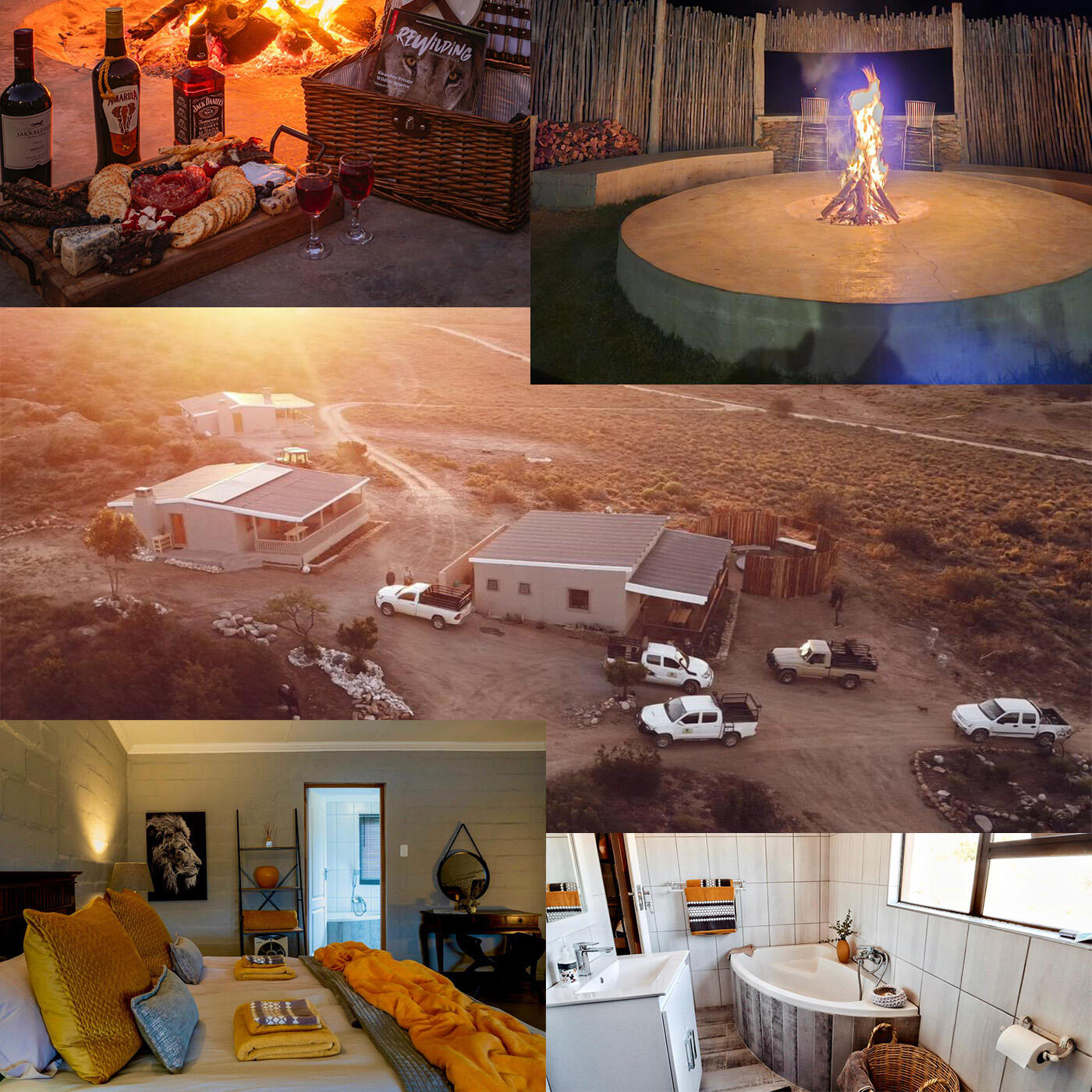
Start Planning Your HuntAfrica Hunt Camp is not built for everyone, and that is intentional.Tell us a little about your group, what kind of hunt you are looking for, what you hope to get out of the experience, and which camp interests you most.We will review your inquiry and get back to you with honest feedback on whether this model is the right fit.This is not only about choosing animals from a list.It is also about understanding what kind of hunter you are, what kind of experience you want, and what skills or lessons you hope to take home.
Submitting this form does not confirm a booking. It simply starts the conversation. We will only recommend a hunt if we believe it is the right fit for your group.
If you are looking for a fully catered traditional safari instead, you can visit Trophy Destinations through the button below.
Looking for the Catered Safari Experience?
Africa Hunt Camp is built for hunters who want a more hands-on, camp-style South African hunt.But if you are looking for a fully catered safari with lodge service, prepared meals, daily housekeeping, laundry, drinks, and a more traditional safari rhythm, Trophy Destinations still offers that too.Same standards.
Same honesty.
Same commitment to proper hunting.Just a different style of experience.